
Start with two AI shopping surfaces.
For ecommerce, start with ChatGPT and Google’s Gemini / AI Mode. Then decide which other surfaces belong in the next test.
A useful surface connects a question to a product and then to a measurable store path.
Mass consumer usage.
Not a niche research audience.
Real product answers.
Visual recommendations, comparisons, prices, and merchant links.
A product-data path.
Shopify Catalog, Google & YouTube, or direct merchant feeds.
A measurable store path.
A store visit or checkout that can be measured separately from a completed purchase.
The two ecosystems.
The shopping conversation.
- Visual product discovery and comparison.
- Shopping research for complex buying decisions.
- Shopify Catalog already integrated.
- Merchant and product paths back to the store.
The search-to-shopping ecosystem.
- 900M+ Gemini app users.
- 1B+ monthly AI Mode users.
- More than 5T Google searches each year.
- Shopify products supplied through Google & YouTube.
This is a prioritization argument, not a claim that Claude, Perplexity, Copilot, or every other answer engine has zero value. For most ecommerce brands, those are second-pass tests after the two largest consumer shopping surfaces are measured.
Shopify shows downstream outcomes. It does not show the full path.
- AI-channel sales and orders
- Sessions and conversion
- Connected channels
- Catalog sync status
- A directional Catalog preview
- Which shopping prompts return the brand?
- Which competitors appear instead?
- Which products never surface?
- Where is the returned destination?
- Which content and catalog fixes matter first?
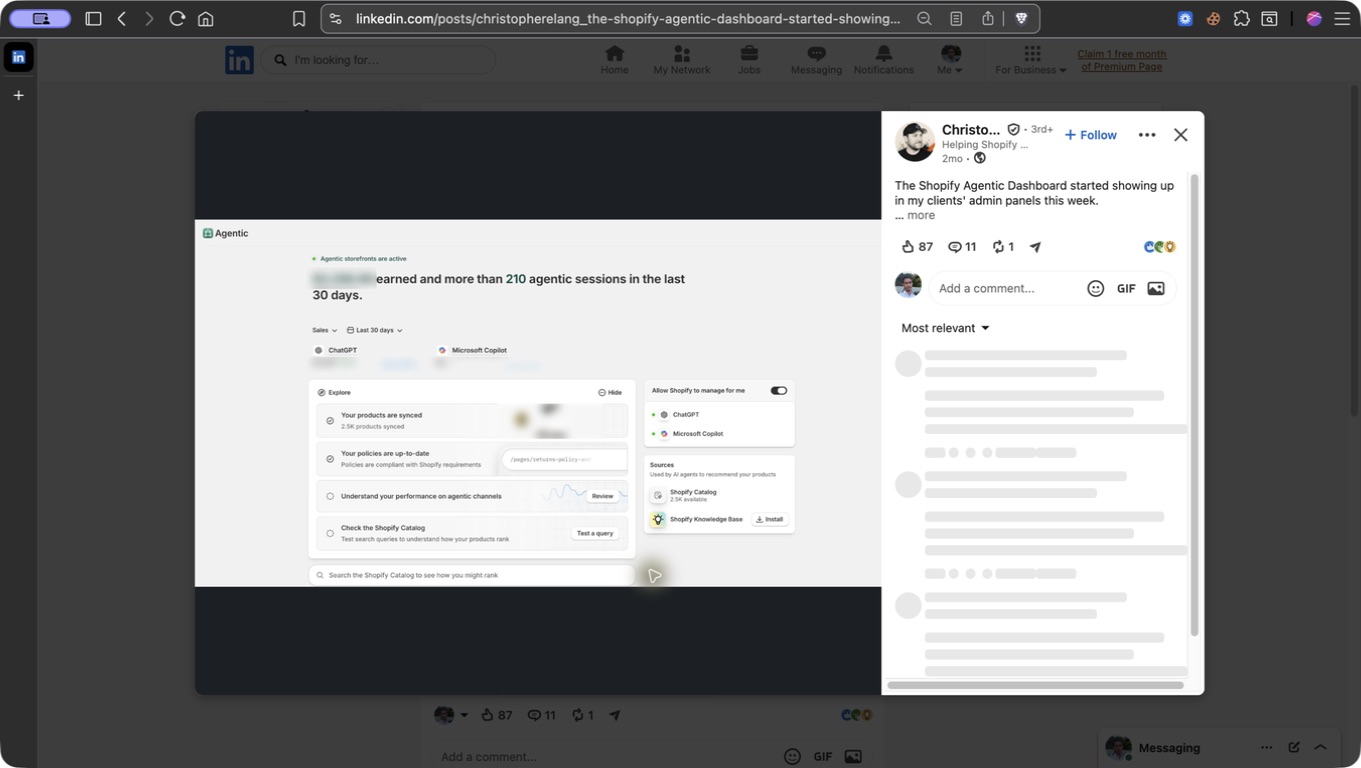
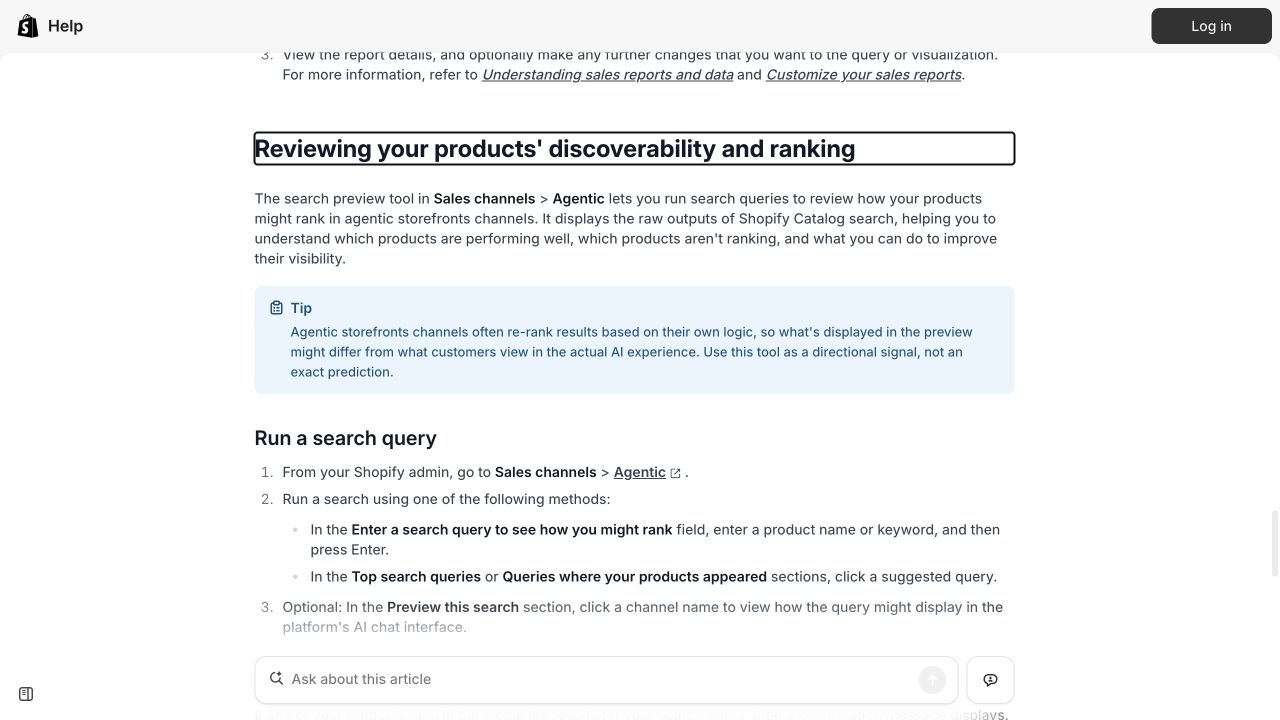
Shopify reports downstream outcomes. A diagnostic records the path that precedes them.
Measure the same five questions across both platforms.
Does the brand appear?
Which products appear?
Who appears instead?
Where does the returned link lead?
Can downstream traffic be measured?
Measure the AI shopping path.
In five business days, document where the path appears, where destination quality changes, and the first three changes worth making. Includes 100 brand- and product-focused checks across ChatGPT and Gemini, competitor and catalog analysis, Shopify/GA4 metrics, and a concise action plan.
One fixed fee, fully credited toward implementation within 14 days.
OpenAI: retail and ChatGPT usage · OpenAI: Powering Product Discovery in ChatGPT · OpenAI: 2.5B+ messages per day · Alphabet: June 2026 investor presentation · Google: 5T+ searches annually · Shopify: agentic storefronts · Shopify: agentic reporting and ranking preview
Audience and message/search figures use different reporting periods and are not directly additive. Neither OpenAI nor Google publishes a complete shopping-prompt total. The figures above establish reach; the commerce integrations establish relevance.